
The Magic of Fermentation:
The Secret Key Behind Premium Chocolate Flavor
If you have ever tasted a dark chocolate bar and been surprised to find notes of berries, caramel, or flowers—without any added flavorings—you are experiencing the result of a perfect fermentation process.
In artisan chocolate making, transforming raw cacao beans into premium chocolate bars is a long journey. Between harvesting and roasting, there is one crucial stage that determines whether the chocolate will become an ordinary mass-produced product or a premium masterpiece: Fermentation.
Why is fermentation so important, and what are the characteristics of well-fermented cacao beans used for craft chocolate?
Why Must Cacao Beans Be Fermented?
Freshly extracted cacao beans have no chocolate flavor at all; they are extremely bitter, astringent, and covered in a sweet-and-sour white mucilage (pulp).
Fermentation, which usually takes 5 to 7 days in special wooden boxes, utilizes natural yeast and bacteria to break down the sugars in the pulp. This process generates heat (reaching up to 50°C) and acetic acid that penetrates the beans. This chemical reaction is what kills the seed, reduces extreme bitterness and astringency, and most importantly: creates the precursors of chocolate flavor. Without fermentation, high-percentage chocolates like Dark 70% or 85% would be overwhelmingly harsh and unenjoyable.
Characteristics of Premium Quality Fermented Cacao Beans
Quality-focused chocolatiers are extremely meticulous in selecting beans. Here are the main indicators of well-fermented beans:
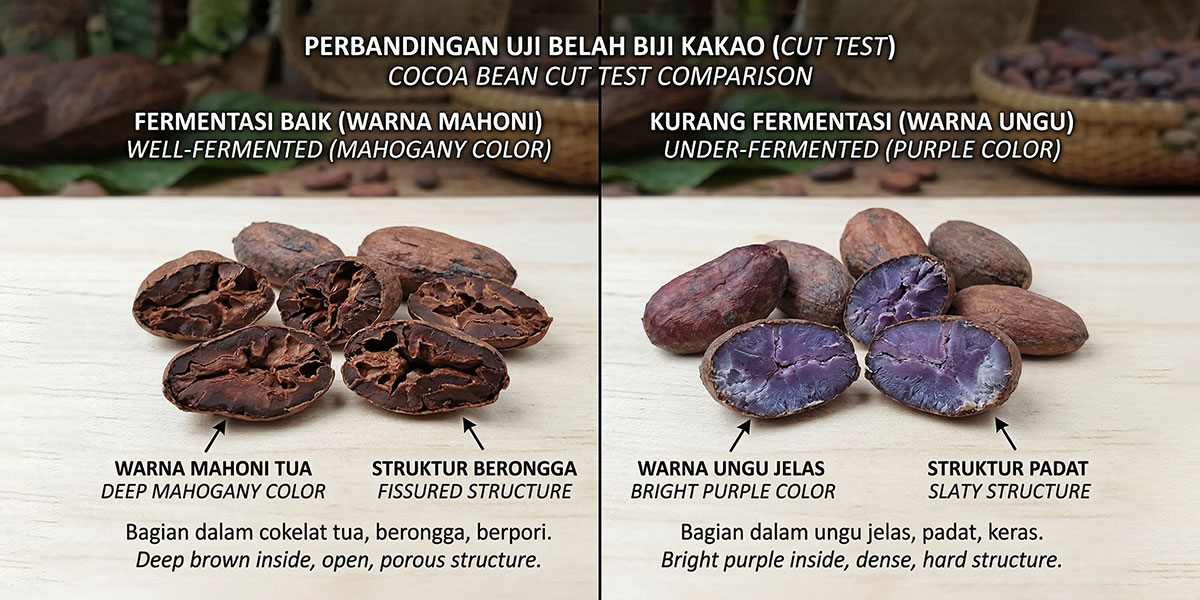
1. The Cut Test: Mahogany Brown Color The most accurate way to check fermentation quality is by cutting the beans open (the cut test).
- Well-fermented: The inside of the bean (nib) is reddish-brown or mahogany, with distinct fissures (open ridges).
- Under-fermented: The bean is deep purple, hard, and solid. This will produce an unpleasant astringent taste.
- Unfermented (Slaty): The bean is grayish, indicating the seed died before fermentation. This will only produce a bitter taste with no chocolate aroma.
2. Distinctive Fruity Acid Aroma Use your sense of smell. Properly fermented and dried beans have a fresh acidic aroma—similar to apple cider vinegar, raisins, or fermented wine (winey)—combined with a foundational chocolate scent. If the beans smell musty, moldy, or like sharp smoke, it is a sign of poor fermentation or drying (usually due to artificial drying or smoking).
3. Brittle and Fissured Texture Raw or unfermented cacao beans are as hard as gravel. Conversely, perfectly fermented beans have a more brittle texture. When pressed firmly, the bean will easily crumble into fragments (nibs). The fissures inside the bean are formed by cellular fluids expelled during fermentation.
4. Shell (Husk) Separates Easily Good fermentation causes the outer shell of the bean (husk) to become loose and slightly puffed. This is highly beneficial during the winnowing process (separating the shell from the nib after roasting). Shells that peel off easily ensure a purer and smoother final chocolate product, free from the bitter contamination of the husk.