
From Tree to Bar:
The Secret to Selecting Cacao Pods for High-Quality Chocolate Bars
Behind every bite of a chocolate bar that melts smoothly in your mouth with a complex flavor profile, there is a long journey that begins long before the roasting process. The ultimate secret of a premium-quality chocolate bar lies not just in the recipe, but in its primary raw material: the cacao pod.
For artisan chocolate makers, choosing cacao pods isn’t just about harvesting crops. It’s an art and a science to ensure only the finest beans make it into the production process.
So, how exactly do you select cacao pods to be crafted into first-class chocolate bars? Here are the main criteria:
1. Precise Ripeness (Pod Color)
Exceptional chocolate starts with perfect ripeness. Underripe cacao pods will yield beans with low cocoa butter content and a highly bitter or astringent taste. Conversely, overripe pods run the risk of beans germinating inside, ruining the flavor profile.
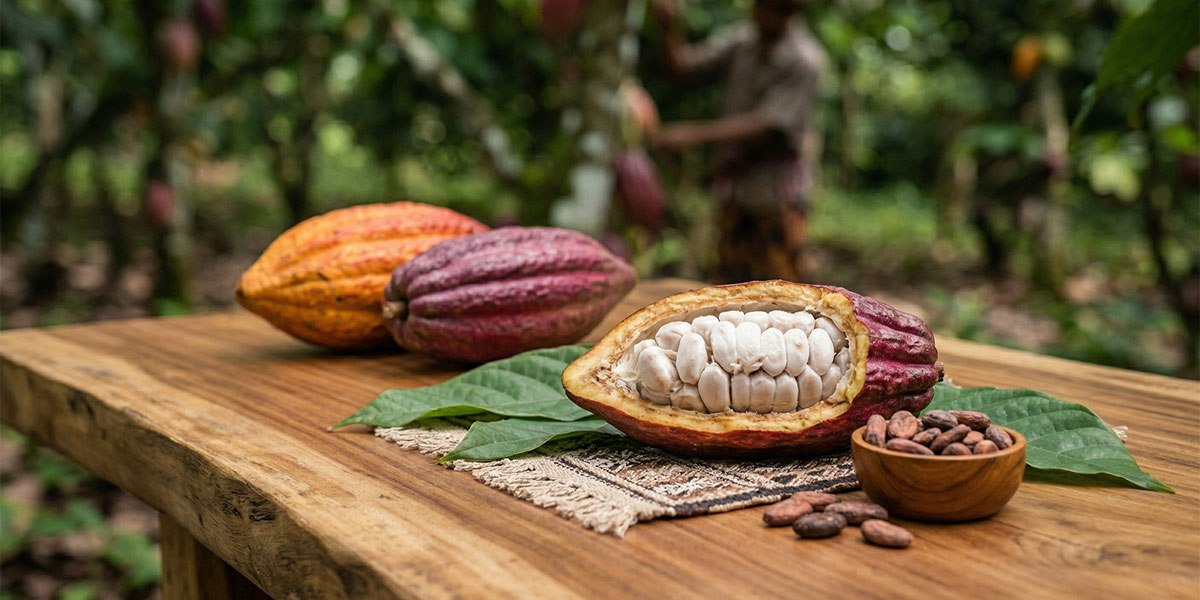
- Green/Yellow Cacao: Typically turns from deep green to bright yellow or orange when ripe.
- Red/Purple Cacao: Will fade into a reddish-orange or yellow in the pod’s ridges.
- The Key: Harvesters must be highly observant of these color changes in the field, as every variety has slightly different color indicators for ripeness.
2. The Distinct Sound When Tapped
Experienced farmers and chocolate makers often rely on their sense of hearing. When a cacao pod is lightly tapped with a finger or a blunt tool, a perfectly ripe pod will produce a slightly resonant or “hollow” sound.
This hollow sound indicates that the beans inside have started to separate from the inner wall of the pod—a sign that the beans are ready to be harvested and fermented.
3. Pod Integrity: Free from Pests and Diseases
The exterior health of the pod reflects the quality of the beans inside. Pods selected for high-quality chocolate must be:
- Smooth and free from holes caused by the Cocoa Pod Borer (CPB).
- Free from large black spots indicating Black Pod disease.
Pests and diseases not only reduce the quantity of beans but can also trigger fungal growth that will ruin the fermentation process and produce off-flavors in the final product.
4. The Quality of the Pulp Protecting the Beans
Once the pod is cracked open, the cacao beans are enveloped in a white mucilage called pulp. This pulp is the primary “fuel” for the fermentation process.
- High-quality pods have thick, juicy pulp with a fresh sweet-and-sour aroma (resembling a mix of mangosteen and soursop).
- Healthy pulp ensures an optimal fermentation process, which is the most crucial stage for developing flavor precursors (the foundation of the distinctive chocolate flavor).
5. Bean Size and Consistency
Although invisible from the outside, once sorted, cacao beans from good pods generally have a uniform and plump size. This size uniformity is highly crucial later during the roasting process. Beans of the same size will roast evenly, preventing burnt or under-roasted beans in a single production batch.