
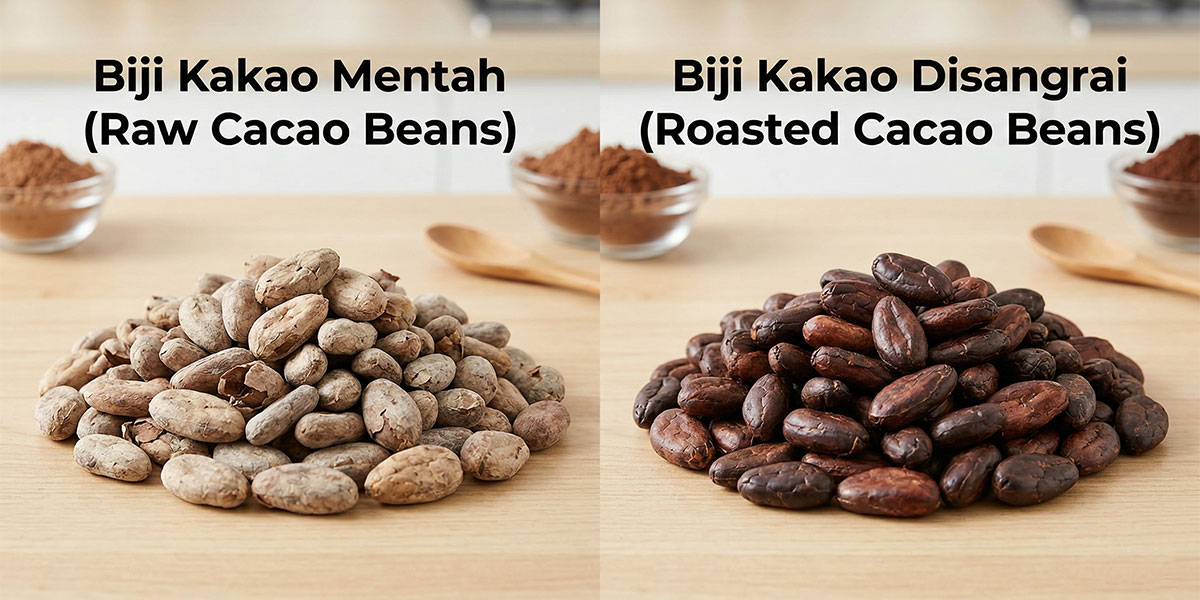
Unlocking the Secrets of Roasting Cacao Beans:
A Temperature and Time Guide for Perfect Flavor
If fermentation is the process of building the flavor “potential” in cacao beans, then roasting is the key that unlocks it. For bean-to-bar or artisan chocolate makers, roasting isn’t just about heating the beans until they are cooked. It is a crucial stage where chemical magic happens, transforming acidic and bitter beans into chocolate with an appetizing aroma.
So, what exactly constitutes a good roasting process? What temperature and time are required to produce premium chocolate bars? Let’s uncover the secrets.
Why is Roasting So Important?
The main objectives of roasting are threefold:
- Killing Bacteria: Ensuring the cacao beans are safe for consumption by eliminating bacteria from the fermentation and drying processes.
- Easing the Peeling Process: Separating the husk from the meat of the bean (nib), making it easy to extract the nibs for grinding.
- Flavor Development (Maillard Reaction): This is the most important one. Heat triggers the Maillard Reaction, where amino acids and natural sugars in the beans react with each other to create hundreds of complex chocolate flavor and aroma compounds (such as caramel, nuts, florals, or fruits).
Cacao Bean Roasting Temperature and Time Guidelines
There is no single “definitive” formula that applies to all types of cacao beans. Every bean (depending on its origin, size, and fermentation quality) demands a different roasting profile. However, in general, the roasting process is conducted at a temperature range of 110°C to 160°C for 15 to 45 minutes.
Here is a guide to the roasting profiles commonly used by chocolate makers:
1. Light Roast
- Temperature: 110°C – 125°C
- Time: 15 – 25 minutes
- Flavor Profile: This profile is highly suitable for fine flavor cocoa beans like Criollo or Trinitario varieties. A light roast preserves the bean’s original character (terroir), highlighting bright acidity, as well as fruity and floral aromas.
2. Medium Roast
- Temperature: 125°C – 140°C
- Time: 20 – 35 minutes
- Flavor Profile: This is the safest and most versatile profile. A medium roast balances acidity with a foundational chocolatey flavor. You will start to smell the distinct aroma of roasted nuts (nutty), light caramel, and brown sugar. It is highly ideal for milk chocolate or classic dark chocolate.
3. Dark Roast
- Temperature: 140°C – 160°C
- Time: 30 – 45 minutes
- Flavor Profile: Produces a very intense, bold, and earthy flavor. Acidity is almost entirely gone, replaced by a heavy cocoa flavor profile and a slight touch of bitterness. This profile is often used for bulk cacao beans (Forastero) or as raw material for commercial cocoa powder.
Other Factors Influencing the Roasting Process
Determining the temperature and time cannot be done arbitrarily. A roaster must pay attention to:
- Bean Size: Larger beans require more time for the heat to penetrate to the core. Therefore, sorting bean sizes before roasting is crucial for even cooking.
- Moisture Content: Beans that are less dry require a higher initial heat to evaporate residual moisture before the Maillard Reaction can occur.
- Equipment: A convection oven will roast faster than a drum roaster because its hot air circulation is different.